
Large Striped Bass Swimming Lures
SPRO, Bomber Wind Cheater, and Danny
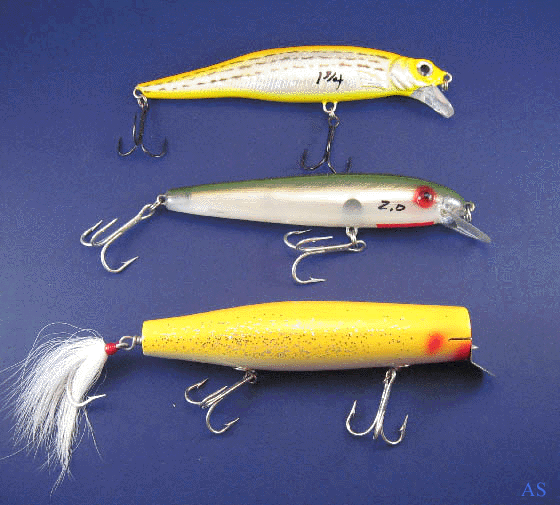
The SPRO, Bomber Wind Cheater, and Danny swimming plugs, are all about 2 ounces in weight. Because they are heavy, they they can be cast farther. Also use them when casting into the wind.
Follow this link to see: Wind Cheater Lures on Amazon.com
About Large Swimming Lures
There are two reasons to use larger swimming lures. One is too cast farther, the larger lures are heavier and help you get some distance from your cast. This is especially important if casting into the wind. The other reason is to catch bigger stripers. Big stripers like big baitfish.
The Bomber Wind Cheater is one of my favorite lures. I like it because I can cast it far. I've caught both striped bass and bluefish on this lure. To see a photo of a Bluefish I caught on a Bomber Wind Cheater lure follow this link: Bluefish.
Swimming lures are either wood or plastic and have a protruding lip that bites into the water and makes the lure dive. It also imparts a side-to-side motion, or wobble, to the lure that makes it appear like a swimming baitfish. Some swimming lures have metal lips that can be bent, or tuned, to make the lure bite in more and dive deeper.
You can fish swimming lures at different depths by:
1. Casting out the lure and retrieving it slowly along the water not allowing it to
dig in much. The lure will stay close to the surface and make a "V" wake. Often this will get some
attention and draw a strike.
2. Cast, then retrieve the lure a little faster, just enough to make the lip dig in and create the
characteristic wobble. You can feel the resulting pulsation through the line so that you can
tell if the lure is working as intended. This is the most common way to fish a swimming lure.
3. Use a plug with a metal lip bent down a little, or a lure with a longer lip. This plug will
dig in more when retrieved and go deeper in the water column.
Try all these techniques. Also for striped bass, remember to retrieve slowly. Fast retrieves are for bluefish.
Northbar Bottledarter
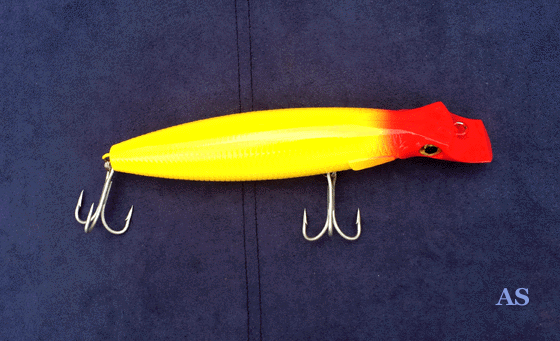
The Northbar Bottledarter is a large plug and it can be cast a long way. It is 7.25 inches long and weighs 2.5 ounces. The lure has a nice darting action and works well in rough water.
It is a good lure to use to reach a blitz off the beach, especially if the stripers are into large baitfish, like bunker.
Follow this link to see: Northbar Bottledarter Lures on Amazon.com
Daiwa SP Minnow Bullet Lure
If you think the stripers are near the bottom, maybe feeding on sand eels, you might try the new Diawa SP Minnow Bullet Lure. This lure is not large but it comes in a fast sinking version that weighs 2 1/8 ounces, so you can cast it pretty far.
Follow this link to see: Daiwa SP Minnow Bullet Lures on Amazon.com